Red On Iturbide:Art Doesn’t Have to Be Typical
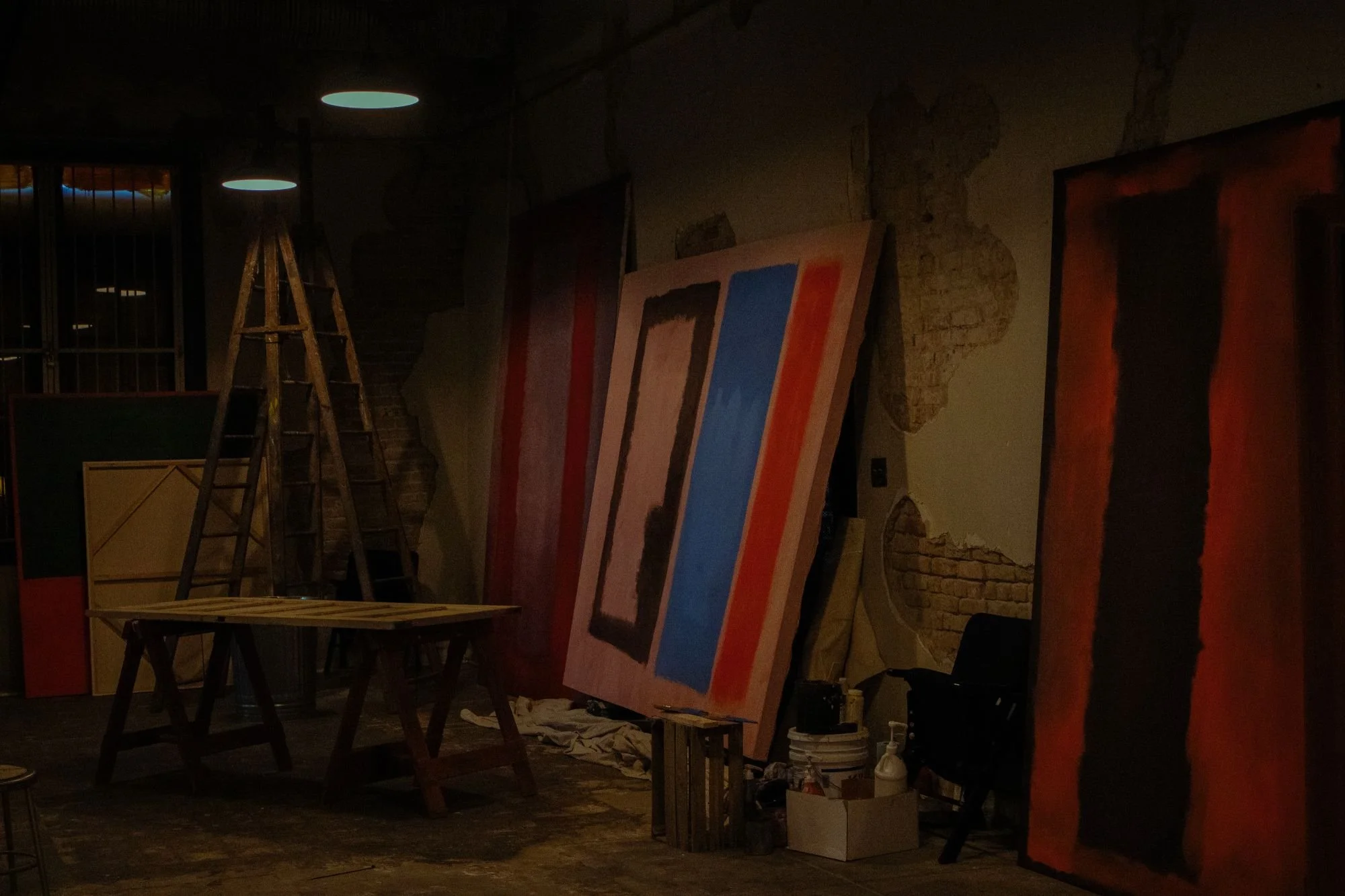
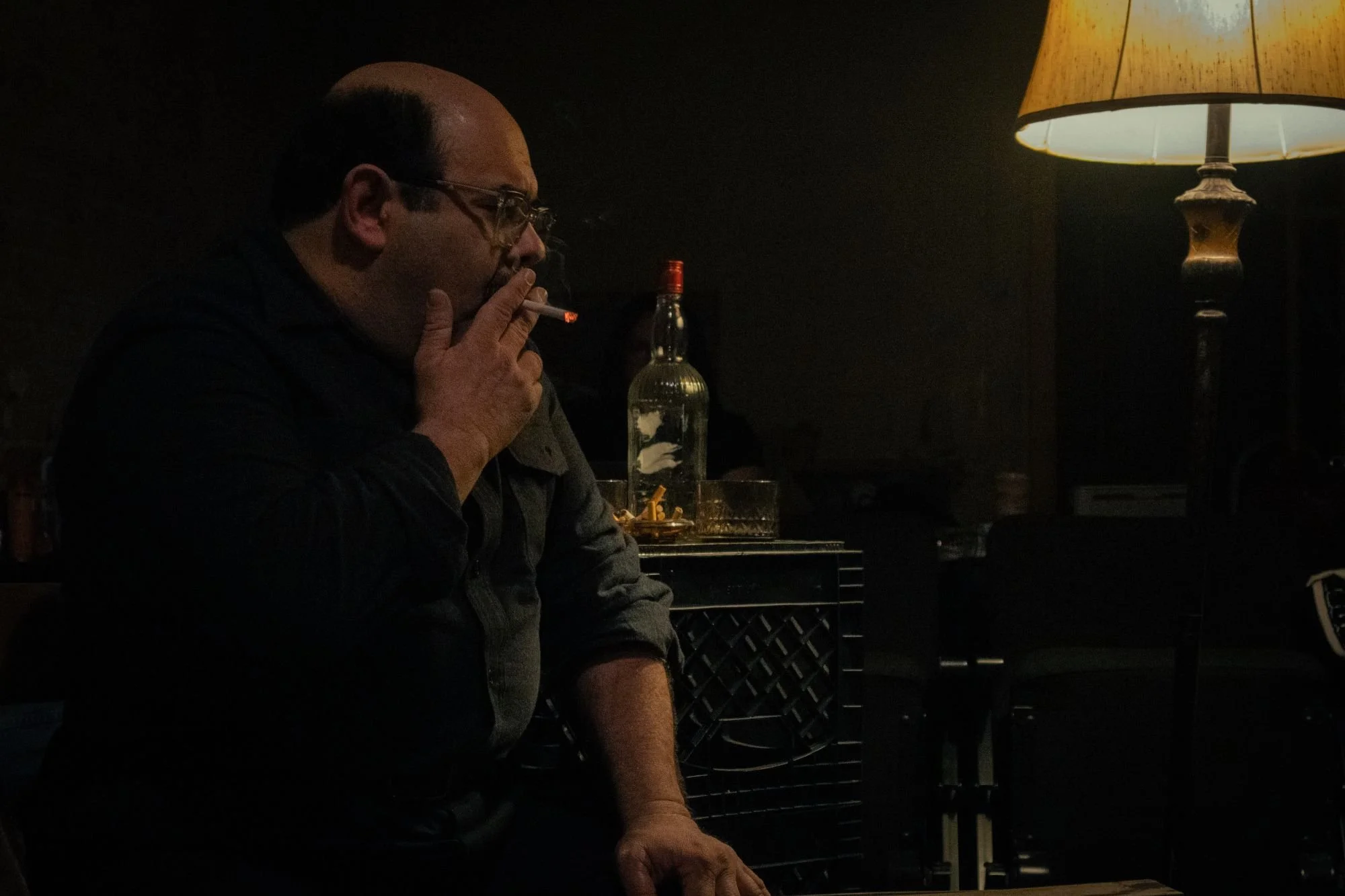
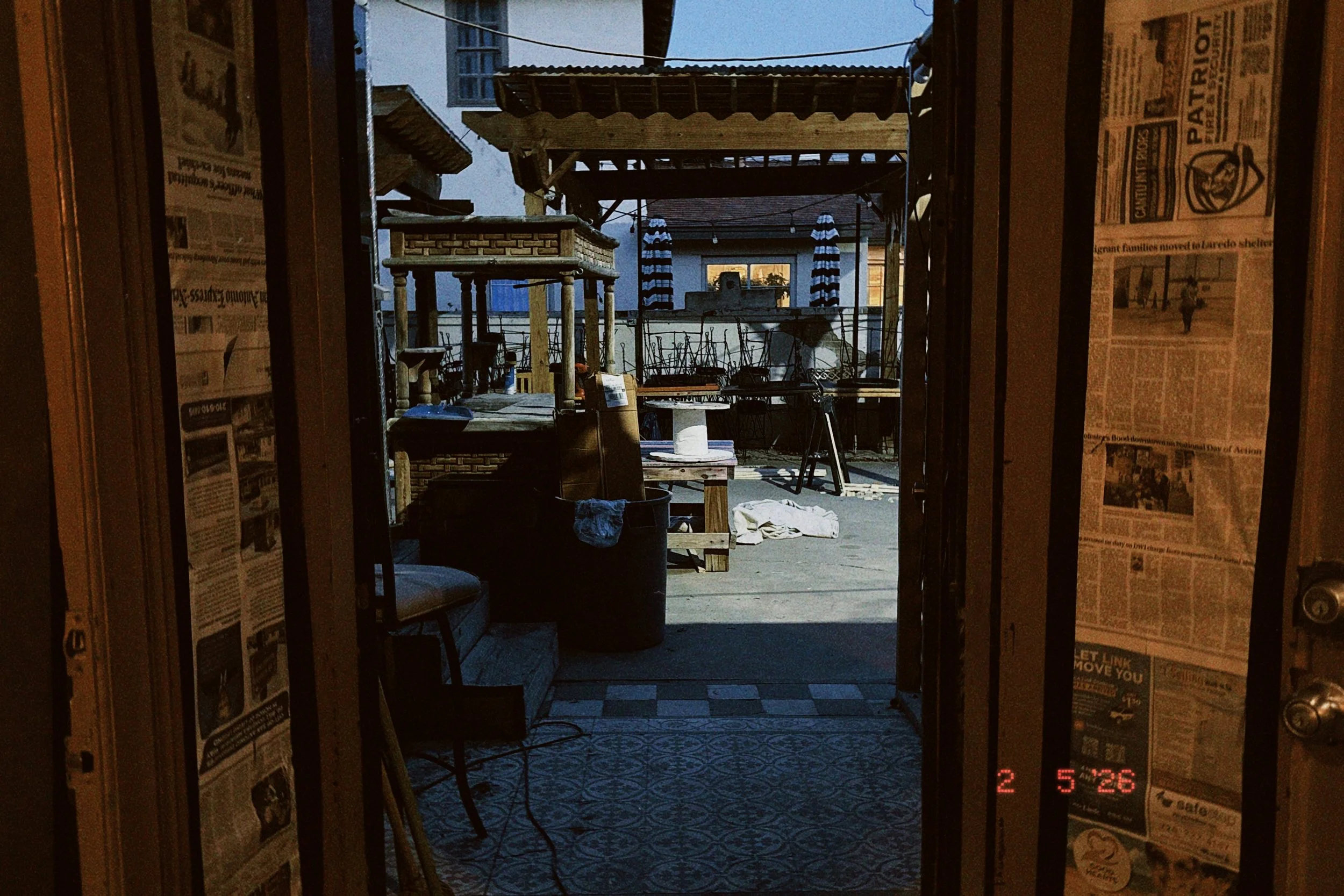
When I think of play, I think of theatre, the folding auditorium chairs, the rows of people, the quiet room, and the professional lighting. You're there, but you're not. Yes, I’m watching this story unfold, but am I in it?And sometimes, a really good play will get your heart, mind, soul, and being in the story, but I can’t help but think how I’m not really there. But I was there on Iturbide St. I was in Mark Rothko’s studio alongside Ken in the cigarette-filled room with a slight paint aroma. I saw and felt the texture that lined the walls and paintings. I felt the real, authentic feeling the minute I walked into the building and into Rothko’s world. And as the screams of “RED” echoed in the room, I felt the scent, sight, sound, and touch coming together and telling me why I’m there.
I’m there because Red on Iturbide was everything but the typical play.
Although still in the rehearsal process at the time, it was not only an honor, but a true fly-on-the-wall experience. Even after watching Scene 2 twice, you feel the same emotions. You pick up on what you didn’t the first time, but you feel it and you’re there again reliving the moment and feeling Rothko’s rage so intensely, I felt I was the one being screamed at in the face.
Being a writer, I didn’t physically scurry across the room with the other photographers as they looked for the most effective angles, but I took in the words. My eyes definitely scurried across the room as I couldn’t walk alongside Rothko and Ken and be a part of their passionate conversation.
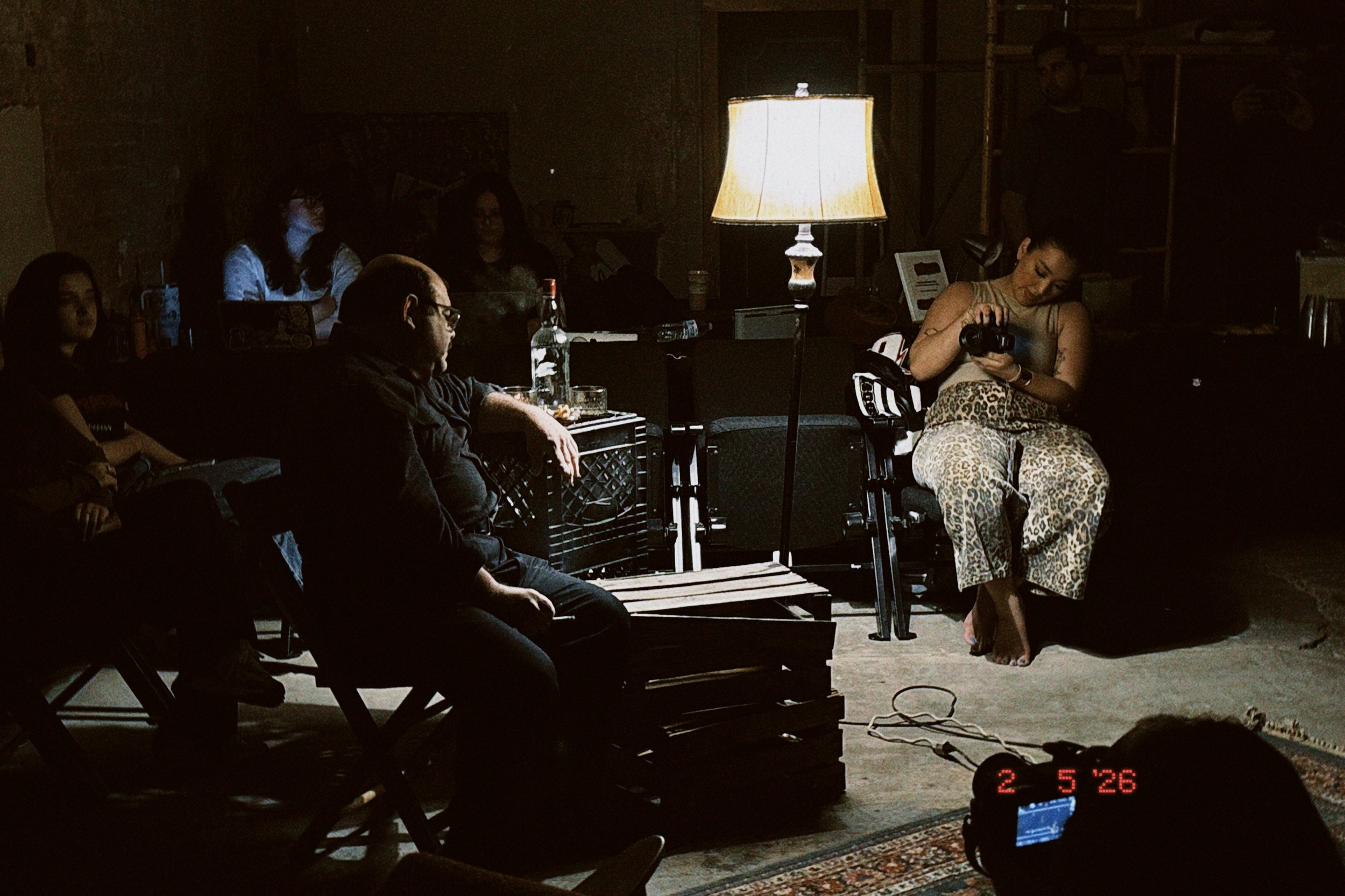
Salem Rochin, of the many photographers and filmmakers, shared their experience and the nerves that came alongside with trying to get the shots. “I came in really nervous because … I think it’s really common to kind of self-doubt, like not be really self-assured of your own work,” Salem said. “You come in and you see people with cameras triple the size of yours, but I feel like if you don’t think about it too much and you just enjoy it, I think we're all here for the fun of it.”
And I definitely agree. We don’t know what we’re doing sometimes, and we try to go with the flow. And I see the beauty in this, because Ken himself is scared. Scared to talk to Rothko. Scared to put himself into the paintings. And it’s just another one of the beauties of this story and its immersive setting. We’re kind of scared and cautious being in this room, but that’s what makes it all the much better; being a part of the story.
Afterwards, Salem revealed that this didn’t overcome the uneasy thoughts. “At some point I was like I’m probably getting in the way of other photographers,” said Salem. “So, I tried to stop or crouch, but then I was like, ‘Hey, if I don’t do this, I won’t get any good shots myself.’” From an outsider’s perspective, watching this scene performed twice made me realize I, too, am scared of missing key things, especially when we’re thrown in the same position twice. It puts you into hyperfocus on what’s in front of you, down to the position of the paint brush as it lands on the floor after it's thrown.
The physical togetherness that this rehearsal brought from the proximity was one of the smaller takeaways. Salem’s thoughts put into perspective reagading how we may be scared, but we get through it. Or at least we try to.
Besides this mental takeaway, a bigger point that stuck with me was the alteration of this historical downtown building. To think that Laredo’s history serves more purpose through art and has become a functioning setting to portray a story which speaks volumes about art continuing from generation to generation in different forms. And Leann Bernal, one of the producers of Red On Iturbide, shares that the crew’s passion project began with her connection to this historic building.
Leann’s connection began as her grandparents owned 819 Iturbide St, and has continued on as she brought her friends to this building, adding to the sentiment and story upon story that a building can hold whether it be real or fictional.
“This space specifically talks about generational artistic differences, and then how art gets transferred from one generation to the next,” Leann explained. “So, that's where we feel coming from different generations … taking wisdom, but also being open to change, and so, in this play, Rothko and his protege, [Ken], can talk about that a lot … there's a lot of conversation about what art should be and what art has been.”
Leann also shared the closeness and relation she felt to the journey of this story and the meaning of art in Red On Iturbide. “It talks about the artist’s journey and how painful that could be, but how beautiful it could be and where we draw our inspiration from,” Leann said. “They talk about traumatic events in people's lives and how that affects art, and I think, for me, too, I draw a lot of myself and my art, and it's a way of a form of expression for me.”
On top of the bond between an artist and their art, Director Marco Gonzalez tells his real and honest perspective as he sees his art come to life. “All I see are mistakes, like, all I see are what they should be doing — that’s all I can focus on,” Marco said. “So, like, right now as they’re doing it, I have notes in my head, but I know that I’m feeling that way because we’re so close to completing something that I think is gonna be very interesting and unique.” And this is real. It’s real that we pick apart our work. In this case, it’s especially true with Rothko. He felt consumed by his art like no other. It felt like he could crawl into it and become the painting.
Three months in the making, Red feels as though the company actually lives at 819 Iturbide, and characters feel just as lived-in. From the intentional and hand-selected records, to being one with the character, Marco shares how he saw himself most in Rothko. “I think that if you talk to any of the team, they might say that I'm kind of a little similar to Mr. Rothko,” Marco said.
“I just love his sensibilities, I love how he thought about art, I love that he was emotional in making his art, because for me, it’s very emotional, too, [and] it really does feel like I’m putting my heart out there for people.”
As Marco articulated his connection to Rothko, he went on to further explain the aim of his work. “I think sometimes we water down or sugarcoat storytelling and content for the masses or we dumb it down to a certain level,” Marco shared. “I didn’t want to make any compromises. I didn’t want to dumb anything down. I really wanted to work on a sophisticated piece of writing, something that was thought provoking, and I want to share something with people that they're going to take with them.”
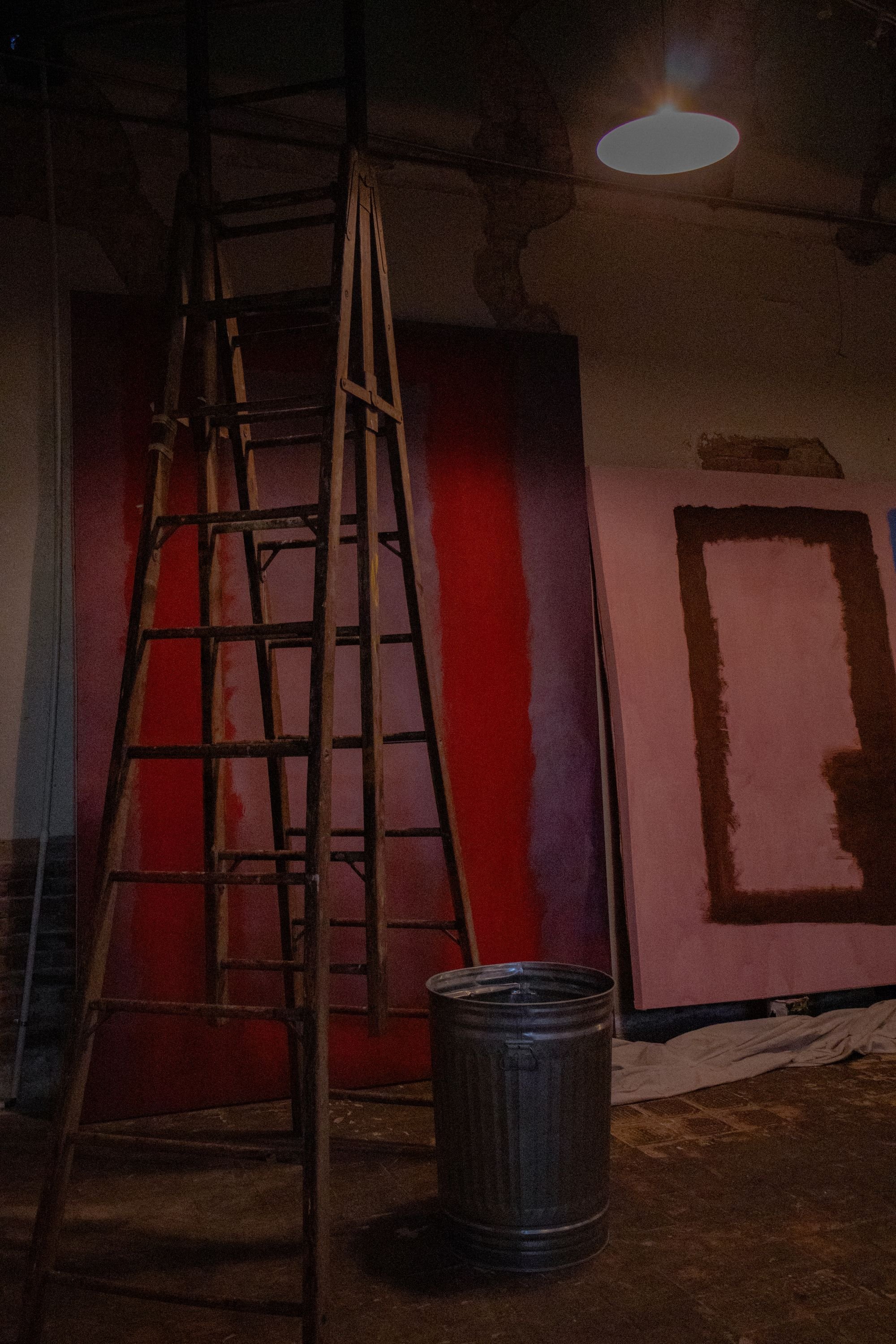
And in my opinion, Marco shared a valid point of what artists do. Although art can be what we make it, the value is lost as soon as we try to make it something it isn’t. We can alter all we want, but we can’t force authenticity and rawness. Hearing this puts not only the story between Rothko and Ken into perspective, but the overall set up of this play. The peeling walls, the mason jars on the shelves, and the strokes on the painting left by the paintbrush are all so raw.
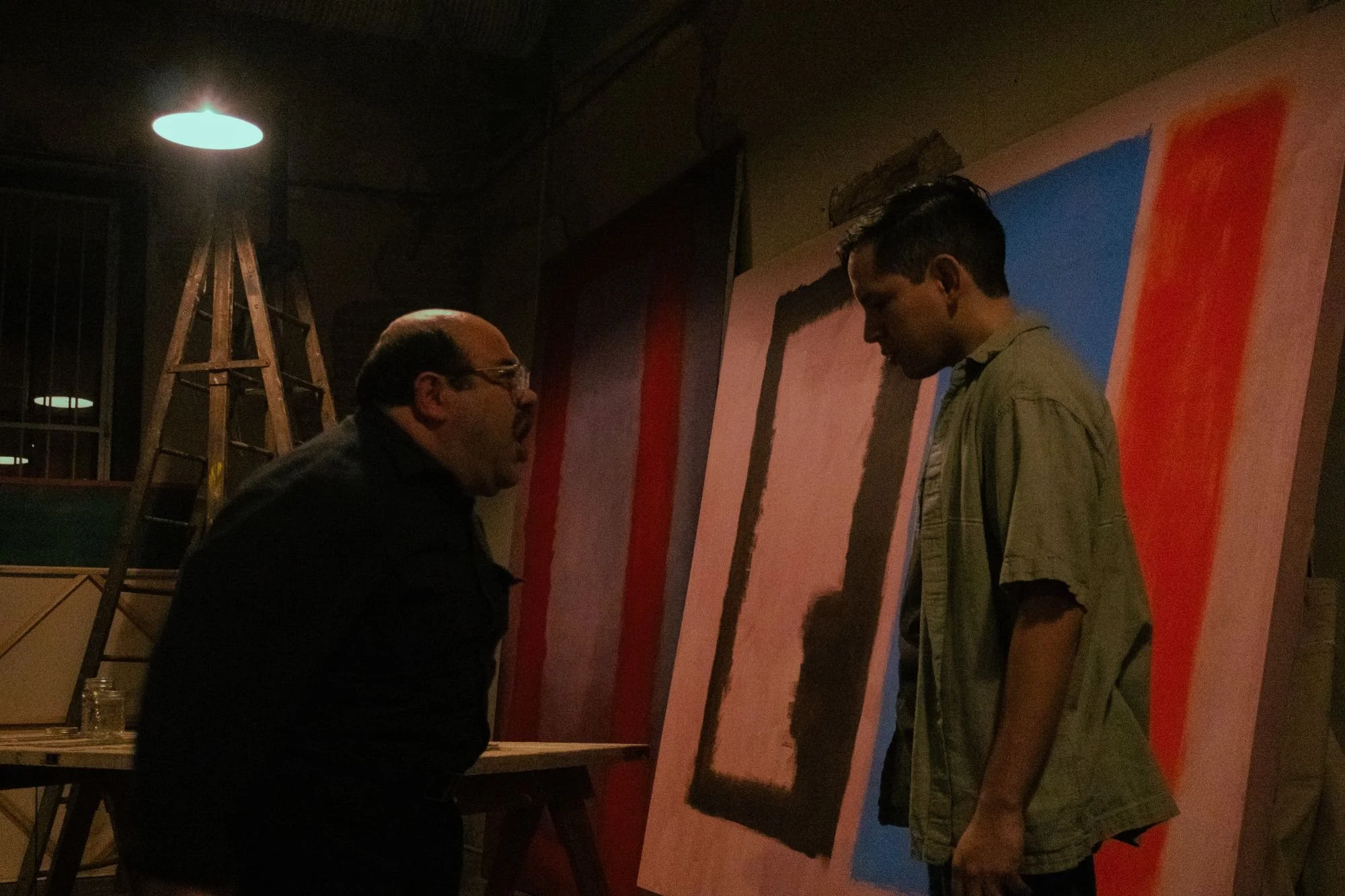
Now, it wasn’t just Marco who saw a part of himself in this story, but Pepe Treviño, who played Ken, saw himself as he played the character. “I’ve been doing art since middle school, getting into high school, and … I’ve always had the attitude of a learner,” Pepe said. “I think wanting to absorb as much from the people around me and the people that I see are doing something above and beyond sort of in their discipline … and so, with Ken, that’s kind of the personal part that I bring to him, of being like a student.” As Pepe shares this similarity, I think when an actor sees themselves within their actor, you see it. It’s noticeable, it’s present. The actor’s personality is seen within the character, and it makes it much more real. Watching Ken try to understand Rothko highlighted this student role.
But even as students, we may struggle to fully understand what the teacher understands.
“There’s definitely times in my life as an artist where I’ve approached a project or come into a project thinking, I already know what I need to know, I’m gonna knock this out of the park and it doesn’t happen that way and I’m humbled and I am sort of brought down a peg and I mean there's definitely the feeling of like I failed, but then there’s resilience of, but I'm gonna learn,” Pepe shared.
“I’m gonna learn something from that failure and it’s gonna make me a better artist.” No matter how uncomfortable Ken was with trying to talk and understand Rothko, he tried, and it’s clear Pepe tried to play the part. And in my perspective, he did it right.
Ultimately, although the night came to an end, the lessons and connections remained. After hearing from individuals from different backgrounds who watched the same scene under the same roof, I can’t help but think of the many more feelings to come. Red On Iturbide shares a story of intense artistic passion, confusion, loss, and discovery created through a passionate crew. It’s a story that shares how even though we may get lost in our work or art, we’re able to find ourselves through connecting with fellow artists, and the immersive experience of this Red on Iturbide Creative Capture Night was the perfect opportunity to do just that.